Banksy guard dog: The Meaning, History, and Cultural Power Behind the Street Art
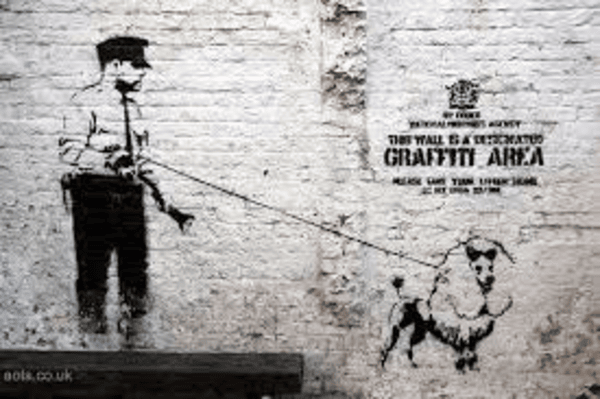
Banksy guard dog is one of the most recognizable examples of Banksy’s sharp street-art language, where humor, authority, and public space come together in a simple but powerful visual message. The artwork is commonly associated with the title “Graffiti Area” and is known for showing a police-style figure with a dog beside a notice that refers to a designated graffiti area. Like many Banksy works, it uses irony instead of long explanation. The image looks simple at first, but its meaning becomes stronger the longer a viewer studies it.
Banksy is famous for turning ordinary walls into public conversations. His work often questions power, social control, consumerism, war, and political hypocrisy. In this piece, the idea of a “guard dog” becomes more than a literal animal. It becomes a symbol of control, surveillance, and the way authority decides what is acceptable in public spaces.
What Is Banksy Guard Dog?
Banksy guard dog, also searched as guard dog Banksy, refers to a stencil artwork connected with Banksy’s 2003 mural known as “Graffiti Area.” The work is usually described as showing a policeman or guard-like figure with a poodle on a lead, placed near the phrase “This is a designated graffiti area.”
The humor comes from contradiction. Graffiti is normally seen as illegal or rebellious, yet the wall appears to be officially controlled and approved. Instead of freedom, even rebellion is placed under supervision. That is the core joke of the artwork: a graffiti area is only allowed when authority says it is allowed.
Why the Dog Matters
The dog in the artwork is important because it changes the tone of the image. A guard dog usually suggests danger, protection, and enforcement. However, Banksy uses a poodle, which creates comic contrast. The dog is not frightening in a traditional way, but its presence beside an authority figure still represents control.
This contrast is typical of Banksy’s style. He often takes serious subjects and presents them through humor, visual surprise, or contradiction. The poodle makes the scene less aggressive but more sarcastic. It softens the image while making the criticism sharper.
Why the Policeman Matters
The police-style figure represents official power. In the context of graffiti, police often symbolize restriction, punishment, and control over public expression. By placing a policeman next to a “designated graffiti area,” Banksy highlights the absurd idea that creativity must wait for permission.
This does not simply criticize one police officer. It comments on systems that control public walls, public speech, and public identity. The artwork asks a quiet but important question: who owns public space?
The Meaning Behind Banksy Guard Dog
The main meaning of Banksy guard dog is connected to authority, censorship, and controlled freedom. Banksy suggests that when rebellion is approved by the system, it may no longer be true rebellion. A wall marked as a designated graffiti area sounds open and creative, but the guard-like figure and dog suggest that the freedom is limited.
Satire of Authority
The artwork works as satire because it mocks the way authority manages behavior. Graffiti is often treated as vandalism, yet street art can also become valuable, celebrated, and protected. Banksy uses this contradiction to expose the strange relationship between illegal art and accepted culture.
When graffiti is unwanted, it is removed. When it becomes famous, it is protected. Banksy guard dog sits directly inside this contradiction.
Public Space and Control
Public space is one of Banksy’s strongest themes. His work often appears outside galleries, where ordinary people can see it without paying. Banksy guard dog questions whether public walls should belong only to property owners, governments, advertisers, or the people who live around them.
The artwork suggests that public space is never fully free. It is watched, managed, cleaned, sold, and controlled. Even creativity can be boxed into approved areas.
A Simple Image with a Deeper Message
The power of the artwork comes from its simplicity. There are no complex details or dramatic colors. The stencil style is direct and easy to understand. Yet the message is layered. A viewer can laugh at the poodle, notice the policeman, read the text, and then understand the deeper criticism.
That is why Banksy’s work often spreads quickly. It is easy to see, easy to remember, and difficult to ignore.
Banksy’s Style in Guard Dog Banksy
Guard dog Banksy fits strongly within Banksy’s wider street-art style. His stencils are usually clean, bold, and readable from a distance. Instead of making the viewer focus only on technique, Banksy uses technique to deliver a message quickly.
Use of Stencil Art
Stencil art allows strong shapes and fast execution. For a street artist, speed matters because outdoor work is often risky. Banksy’s stencil method helped create a visual identity that is instantly recognizable. In banksy guard dog, the stencil format makes the authority figure and dog look almost like public signage, which strengthens the joke.
Humor as Protest
Banksy rarely explains his message directly. Instead, he makes the viewer think through humor. In this artwork, the humor comes from the contrast between freedom and control. The idea of a guarded graffiti area is funny because it feels impossible. But that impossible idea reflects real society, where even rebellion is often regulated.
Quick Info About Banksy Guard Dog
Key Details
Artwork name: Banksy Guard Dog
Common title: Graffiti Area
Related keyword: guard dog Banksy
Year associated with the mural: 2003
Artist: Banksy
Style: Stencil street art
Main subject: A police-style figure with a dog near a designated graffiti area notice
Main themes: Authority, public space, controlled freedom, satire, graffiti culture
Known location: Shoreditch, London
Why Banksy Guard Dog Still Matters
Banksy guard dog remains relevant because its message has not become outdated. Cities still debate graffiti, street art, public property, and visual freedom. Some murals are removed as vandalism, while others are protected as cultural treasures. This double standard is exactly the kind of contradiction Banksy often exposes.
The artwork also speaks to a wider issue beyond graffiti. It reflects how society sometimes allows freedom only when it is controlled. People are encouraged to be creative, but only in approved ways. They are told to express themselves, but not too loudly. Banksy guard dog captures that tension in one clear image.
FAQs About Banksy Guard Dog
What is Banksy guard dog?
Banksy guard dog refers to a Banksy stencil artwork also commonly connected with the title “Graffiti Area.” It shows a police-style figure with a dog beside text referring to a designated graffiti area.
Is guard dog Banksy an official artwork?
The work is widely discussed as a Banksy street artwork and is commonly associated with Banksy’s 2003 “Graffiti Area” mural. For buying or authenticating any Banksy artwork, only official authentication should be trusted.
What does Banksy guard dog mean?
The artwork criticizes authority and controlled freedom. It suggests that public creativity becomes ironic when it is only allowed under official supervision.
Why is the dog shown as a poodle?
The poodle creates visual humor. Instead of a fierce guard dog, Banksy uses a less threatening dog to make the scene more ironic and satirical.
What is the main message of guard dog Banksy?
The main message is that authority often controls even the spaces where people are supposed to express themselves freely.
Conclusion
Banksy guard dog is powerful because it turns a simple street scene into a sharp social comment. Through a police-style figure, a dog, and a designated graffiti notice, Banksy questions who controls public creativity. The artwork is humorous, but its message is serious. It reminds viewers that freedom can sometimes be offered only as a controlled illusion. That is why guard dog Banksy continues to attract attention, discussion, and respect in the world of street art.